Project Details

Notes of Exile
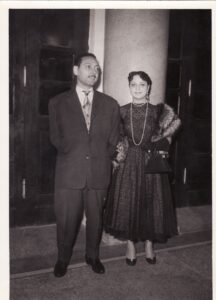
Virtuoso pianist Maurice El Medioni (b. 1928 in Algeria, d. 1924 in Israel) was a forgotten musician when, at the age of 70, he gained recognition and became an international icon of world music. Regarded by many as a symbol of tolerance and multiculturalism, Maurice embraces all the new sounds and rhythms he encountered in his life, without losing his identity. He created music that connects cultures, genres, people and places.

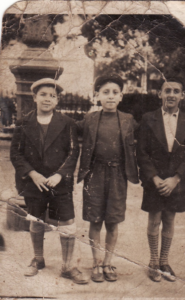
When World War II broke out in 1939, Maurice was a 10-year-old Jewish boy in Algeria, where his widowed mother struggled to provide for her four children. His life changed when his older brother bought him an old piano, and he taught himself to play it. That gift was to take him on a diverse musical journey, as a child who supported his family, then appearing on major stages and festivals throughout the world, and being awarded, 60 years later, the prestigious BBC World Music Award.
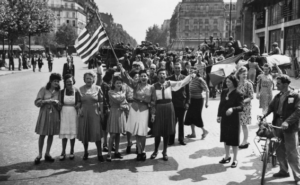
The film is a cinematic and musical journey that follows Maurice’s life and musical career, from WWII and the liberation by the US army, the condemnation of his music as “colonial” by Algerian revolutionary nationalists and his exile, first to France, driven out by anti-Semitism in 1961, and later to Israel, where his music was played in all celebrations, and yet his name remained unknown to the greater public.
We have been accompanying and documenting Maurice el Medioni since 2009 in Israel and abroad. Through the narrative of Maurice’s life and diverse music and lyrics, we tell the story of his exile and of his community, while the last living witnesses are still here. This is an exile in the broadest sense, of people and sounds of all cultures. The film explores how Maurice’s music is timeless and highly considered in jazz and world music circles. We will revel the new generation of musicians inspired by the great master and through them his music lives on.
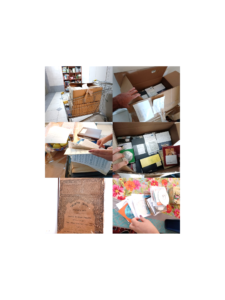
We are using the visual and musical wealth at our disposal to create a cinematic language adapted to the spirit of the project, utilizing archival films from Algeria, professional television archives and personal collections by the artist himself. The film offers a documentary journey and a concerts tour throughout a century, that corresponds with the Maurice’s life journey: from accompanying the most prominent Jewish and Moslem artists in North Africa to his late solo career – releasing to albums receiving great critics, appearing
This is a contemporary documentary, a vibrant portrayal of a musician who is still modern and relevant after almost a century of music. He will be presented as he is, a shining figure in international arena. Maurice and his musician friends will be the main characters, like Maurice’s music, the editing will be dynamic and rhythmic, aligning concert footage with archival material through careful and delicate calibration.






Jews of Algeria Many Jews from Morocco and Algeria arrived there after the expulsion from Spain, joining communities that had arrived during the Roman period after the destruction of the First Temple. When Muslims attempted to invade Algeria in the 7th century, they were thwarted by Jewish forces led by Queen Al-Qahina.
In 1492, Jewish refugees from the expulsion of Spain arrived in Algeria, and in the 17th and 18th centuries, their descendants, descendants of the Marranos from Italy, arrived. In 1830, a hundred years before El Medioni’s birth, there were around 30,000 Jews in Algeria. The French invaded Algeria on July 5, 1830, but the persistent resistance of the local population slowed down the conquest. It was only at the beginning of the 20th century that Algeria fell into the hands of the French conquerors.
The French invaders made Algeria an integral part of French territory, and tens of thousands of settlers from Europe settled in Algeria. European settlers and Jews, who received French citizenship, were treated as citizens with representation in Parliament. In contrast, the treatment of Arabs and Berbers was discriminatory, subjecting them to a pseudo-apartheid regime.
In 1870, Jews in Algeria were granted French citizenship, but they experienced anti-Semitism both from their Algerian neighbors and the French. Pogroms and persecutions occurred occasionally, but shared life continued as a norm. During World War II, all their rights were revoked, and their French citizenship was stripped from them. During the same period, Vichy authorities pursued all 117,000 Jews in Algeria, subjecting them to hunger and persecution to the point of life-threatening danger.
In 1954, the National Liberation Front (FLN) initiated a guerrilla war against the French, marking the beginning of Algeria’s War of Independence. After about eight years, in 1962, the fighters succeeded in expelling the French. With the withdrawal of the French army from Algeria, most settlers returned to France.
During the Algerian War of Independence (the Algerian War), Jews there suffered greatly, and after its conclusion, around 130,000 Jews were expelled from Algeria, most of them to Israel and France. Today, only about 200 Jews reside in Algeria, and only individual Jews are allowed to visit.